
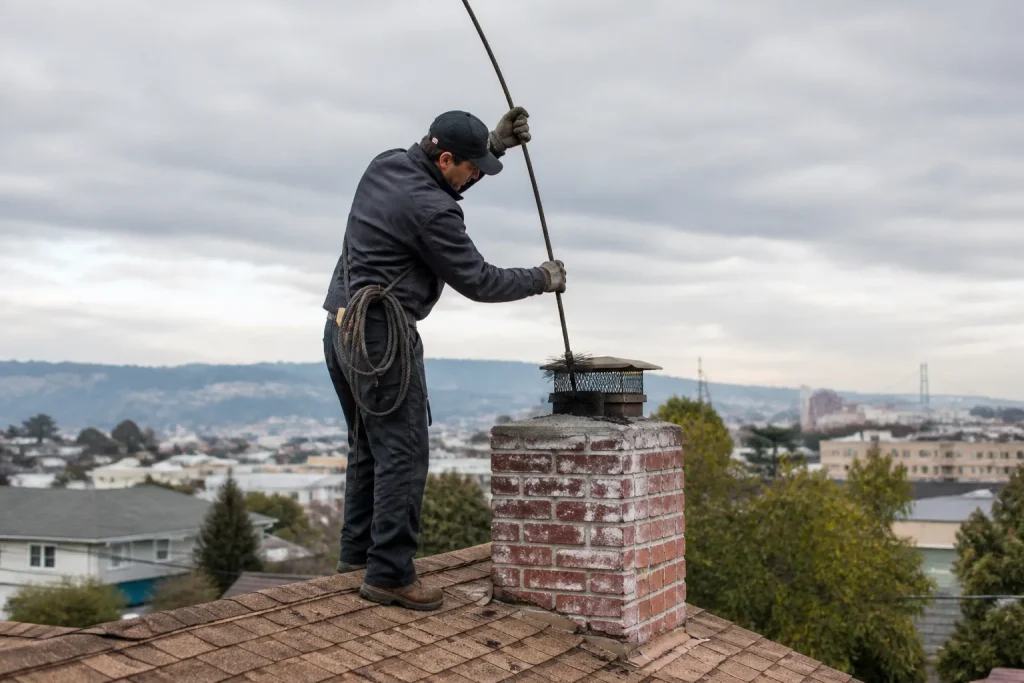
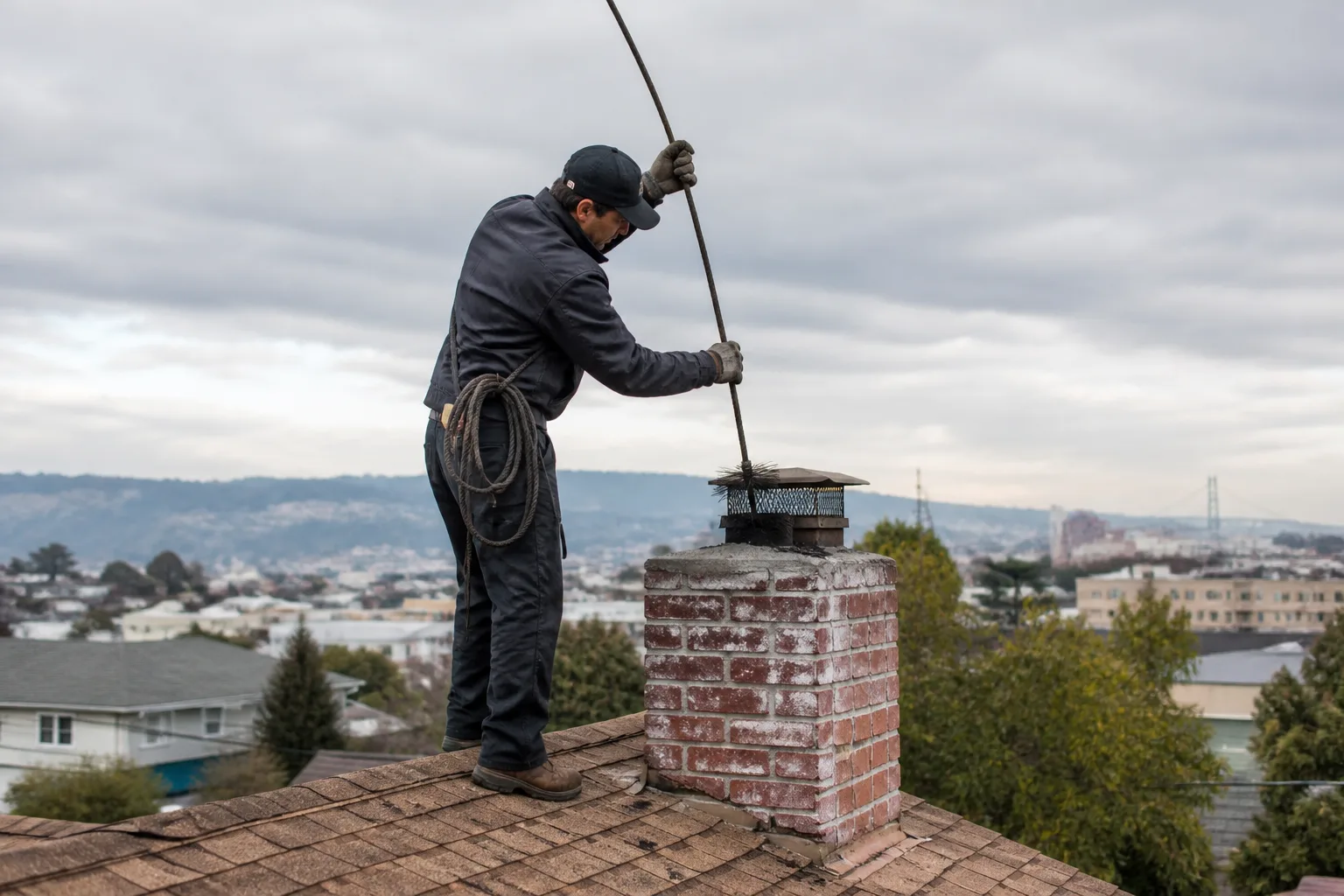
Emergency Chimney Sweep Near Me: What Richmond Homeowners Should Do First
If you smell smoke in a room with no fire, hear a low roar from the flue, or see creosote flakes on the roof, treat it as a chimney problem until proven otherwise. The first thing to do is close the damper and the firebox doors to cut the air supply, get everyone out of the house, and call 911 if flames or heavy smoke are visible. If nothing is burning but something is clearly wrong, call a sweep. Call (866) 361-9755. We answer 24/7. Fast dispatch from 7am to 7pm, Sunday through Friday.
Key Takeaways
- Cut the air first. A chimney fire feeds on oxygen, and closing the damper and firebox doors starves it.
- Never throw water on a hot firebox. The thermal shock can crack firebrick and cast iron.
- Call 911 for active fire, heavy smoke, or any damage to the structure. Call a sweep for everything short of that.
- Document what you saw, smelled, and burned. It changes the diagnostic starting point.
- After any fire event, a Level 2 inspection comes before the next fire, per NFPA 211 guidance.
A word on the title of this piece: in our experience, the “emergency” most Richmond homeowners are searching for is usually a slow realization, not a siren. A faint smoke smell that wasn’t there last month. A draft that pulls harder than it should. A chunk of tile in the firebox. The search happens when something feels off and nobody has explained it yet. Here’s what actually helps in that moment.
What Should You Do in the First Fifteen Minutes of a Chimney Emergency?
Close the damper and the firebox doors, evacuate the house, and call 911 if you see flames or heavy smoke. If you don’t see fire but the chimney is behaving wrong, skip the 911 call and call a sweep. The fifteen minutes after you notice a problem are worth more than the next two hours, because the actions you take decide whether the situation stays contained.
Here’s the sequence we’d walk any Richmond homeowner through on the phone:
- Stop feeding the fire. Don’t add wood, don’t stir the coals, don’t open the doors to look. Every opening is more air.
- Close the damper and the firebox doors. Cut the chimney’s air supply. A chimney fire without oxygen loses its fuel fast.
- Get people and pets outside or to the far side of the house. Smoke is the real hazard indoors, especially in a Richmond home with an older flue.
- Call 911 if you see flames at the top, hear a roar, or smell strong smoke in the living space. Firefighters confirm the fire is out; a sweep checks the damage afterward.
- Don’t use water. Not from a hose, not from a bucket, not from a spray bottle. Water on a hot firebox can crack firebrick and warp a damper. It also produces a steam cloud that pushes smoke back into the room.
One more thing: don’t relight the fire that evening to “see if it’s fine.” A chimney that’s had a fire event needs eyes on the inside before it sees flame again.
What Are the Three Types of Chimney Emergencies, and How Do They Differ?
The three types are an active chimney fire, sudden smoke intrusion into the living space, and structural damage after a storm. Each has a different first priority. Confusing them is the most common mistake we hear about, because a homeowner treats all three as “call a sweep and wait.”
1. Active chimney fire
A chimney fire is often silent. Many homeowners describe a low roar they mistake for strong draft, or a vibration in the flue, or a sudden smell of hot metal. If you suspect an active fire, the priority is evacuation and 911. A sweep comes after, to assess what the fire did to the flue. That assessment is where our chimney repair work usually begins.
2. Smoke intrusion into the living space
Smoke backing into a room with the damper open usually points to a blockage, a reversed draft, or a flue that’s too small for the appliance. The priority is opening a window, getting the fire out safely, and stopping the use of the fireplace until it’s diagnosed. This is not a 911 call unless there’s fire, but it is a call-a-sweep-today situation.
3. Structural damage after a storm
A missing cap, a cracked crown, or a chimney that’s pulled away from the roofline after wind is a structural problem. The priority is keeping people away from the area below and not lighting a fire until someone looks at it. Richmond winters are mild, but wind and rain still find weak mortar and loose caps. We inspect the whole flue system on these visits, not just the firebox.
What Does an Emergency Chimney Inspection Actually Cover?
An urgent visit covers what can be assessed safely and accurately with a flashlight, a mirror, and manual tools: the firebox, damper, smoke chamber, visible flue, cap, crown, and exterior. A full camera inspection of the flue often needs daylight and a camera system, and sometimes needs the firebox cool enough to work in. We’re honest about which is which.
Here’s what we can typically assess on an urgent visit:
- Whether the chimney is currently safe to use
- Visible creosote buildup, glaze, or flaking
- Damper operation and firebox condition
- Cap, crown, and visible exterior damage
- Signs of a recent fire event inside the smoke chamber
And here’s what usually waits for daylight and a camera:
- A full-length flue scan for cracks and gaps in the tile
- Offset and transition joints that need to be seen, not felt
- Liner condition after a fire event, especially in an older Richmond flue
We’ll tell you what we found and what it means, including when work can safely wait. Nothing gets recommended without camera evidence you can see for yourself. If you’re comparing options for a chimney sweep, ask what the visit includes. The answer should be specific.
What Should You Document Before the Technician Arrives?
Take photos, note what you smelled, and write down what was burning and for how long. That information changes the diagnostic starting point, sometimes more than the visual inspection does. A sweep who knows the fire was a hot, fast one behaves differently than a sweep who knows it was a slow smolder overnight.
What to capture:
- Photos of the firebox, the damper, the top of the chimney, and any visible smoke staining
- Smell: sharp and acrid, sweet and chemical, or plain wood smoke
- Fuel: hardwood, softwood, manufactured logs, or paper and cardboard
- Duration: how long the fire was burning before you noticed the problem
- Behavior: smoke where it shouldn’t be, a roar, a vibration, or a draft that changed
- Weather: wind direction, rain, or a storm in the last few days can point to a cap or crown issue
Nothing on that list is a diagnosis. It’s context. A sweep who walks in with context skips the guessing and goes straight to the part of the flue that needs looking at.
When Can You Relight After a Chimney Fire?
Not until a Level 2 inspection has been completed, per NFPA 211 guidance. That’s the standard for any chimney that has had a fire event, a sudden event like an earthquake or storm, or a change in the appliance. A Level 2 inspection includes a camera scan of the flue, and it’s what tells you whether the liner is intact or has gaps that could let heat reach the framing.
If the inspection comes back clean, relighting is fine once the flue is swept and the firebox is sound. If it doesn’t come back clean, we talk through the options. In many cases a deteriorating flue can be rehabilitated without a teardown. HeatShield is a liner restoration system that resurfaces cracked and spalled flue tile from the inside, and it’s a repair pathway most sweep-only companies aren’t set up to offer. For flues that are offset, aged, or non-standard, a DuraFlex flexible stainless liner is often the right answer. Both are professional-tier products, and both are part of why we can find a problem and fix it in the same visit when possible.
What we won’t do is tell you a chimney needs thousands of dollars of work you have no way to verify. If we recommend a repair, we show you the camera footage and explain which part of the flue system it addresses. If the chimney can safely wait, we say so.
What Actually Happens If You Skip It?
The risk is chimney fire and carbon monoxide. Creosote builds up on the flue walls every time you burn, and glazed creosote is the kind that ignites. A blocked or damaged flue can also push carbon monoxide back into the home, which is why a working carbon monoxide alarm matters on every floor with a fuel-burning appliance. None of this is meant to scare you into booking today. It’s meant to explain why the annual sweep and inspection isn’t a maintenance upsell.
If your last sweep was more than a year ago and you burn regularly, you’re due. If you’ve had a fire event, a storm, or a change to the appliance, you’re due regardless of the calendar. A sweep is booked, not dispatched on a whim, and the urgency is seasonal: before burning season, not before the next log.
When Should You Call a Pro Instead of Waiting?
Call a pro when you can’t explain what’s happening. A chimney that behaved normally last winter and doesn’t now is telling you something. So is a fire that’s harder to start, a draft that pulls the flame sideways, or creosote flakes on the roof. Our technicians have up to 13 years of experience and the manufacturer training to work on DuraFlex, HeatShield, Gelco, Olympia Chimney, Famco, and Copperfield components, which means the diagnosis and the repair come from the same company.
Your immediate safety call is 911. Your chimney call is a sweep. A call outside dispatch hours is booked into the next opening, Sunday through Friday, 7am to 7pm. If it’s a Sunday morning and something’s clearly wrong with the flue, that’s the call we want to take.
Related services in Richmond
If you’re in Richmond and want to schedule a sweep, a Level 2 inspection, or a repair estimate, we can help with all three under one roof. Free estimates, written before any work begins, and a flat price agreed before the visit.
The Bottom Line
In a chimney emergency, the first fifteen minutes belong to you: cut the air, get people out, call 911 if you see fire, and don’t put water anywhere near a hot firebox. Document what you saw and smelled. Then call a sweep. The difference between a bad evening and a real loss usually comes down to those four actions.
If you’re in Richmond and need help, Juniper Chimney Sweep offers free estimates. Call (866) 361-9755. We answer 24/7. Fast dispatch from 7am to 7pm, Sunday through Friday.
Frequently Asked Questions
A standard sweep typically runs in the low-to-mid hundreds, and a Level 2 inspection with a camera scan runs more because it includes the flue scan and a written report. The written estimate sets the final price, so ask for it before anything is booked. Call (866) 361-9755 for an exact quote – estimates are free.
Yes. NFPA 211 guidance calls for a Level 2 inspection after any chimney fire, sudden event, or appliance change. It includes a camera scan of the flue and tells you whether the liner is intact. A sweep without a camera can’t tell you that. Call (866) 361-9755 to book one.
Not before it’s been inspected. A fire that went out on its own may still have cracked tile or warped metal inside the flue. The safe sequence is sweep, inspect, then relight. If the inspection is clean, relighting is usually fine. Call (866) 361-9755 to get it on the book.
Call 911 for an active fire, heavy smoke indoors, or any structural damage. Call a sweep for everything short of that: smoke smell, a weak draft, a whistle, flakes on the roof, or a fire that behaved strangely. If you’re not sure, call a sweep and we’ll tell you honestly whether it’s a 911 situation. Call (866) 361-9755. We answer 24/7.
Written by the team at Juniper Chimney Sweep.
Need Chimney Cleaning Help?
Call Juniper Chimney Sweep - licensed & insured, here with fast help in Richmond.
(866) 361-9755