
Last updated November 15, 2026
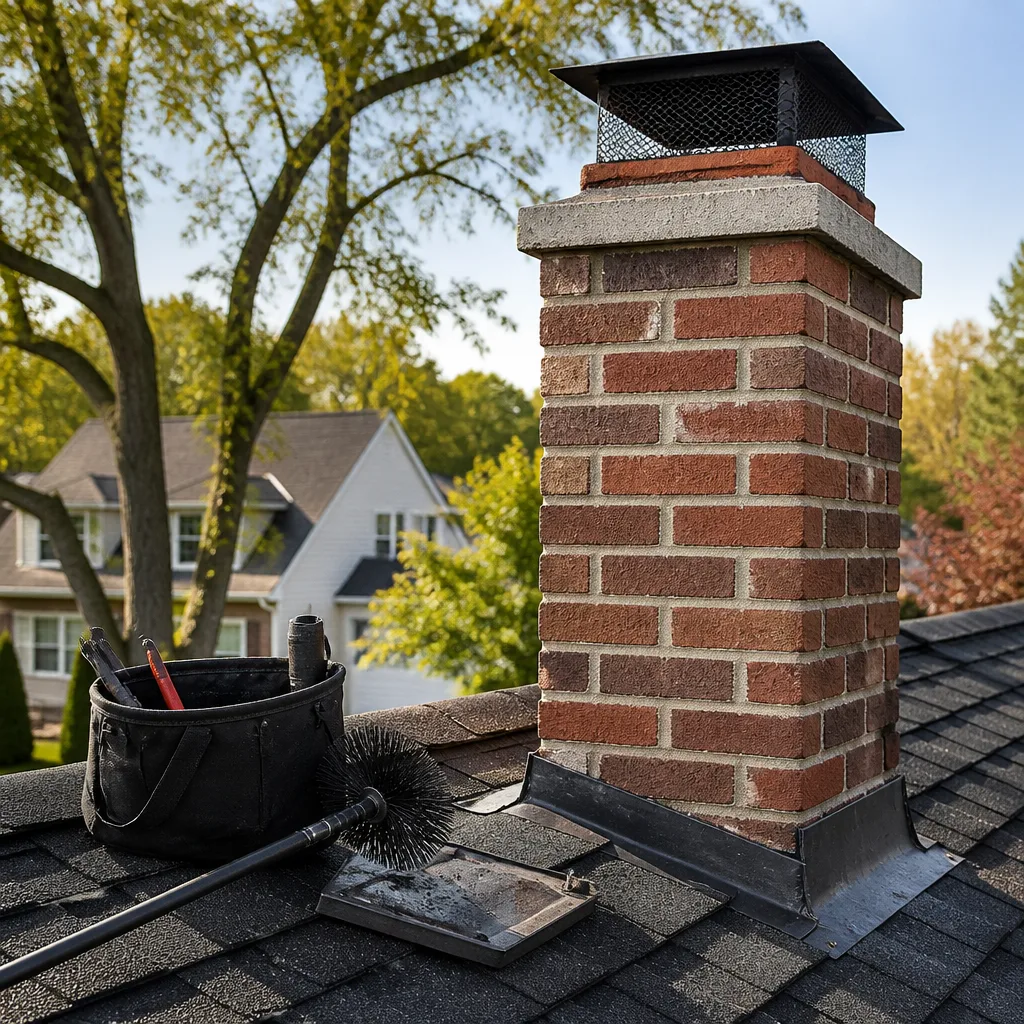 Sweep & inspection
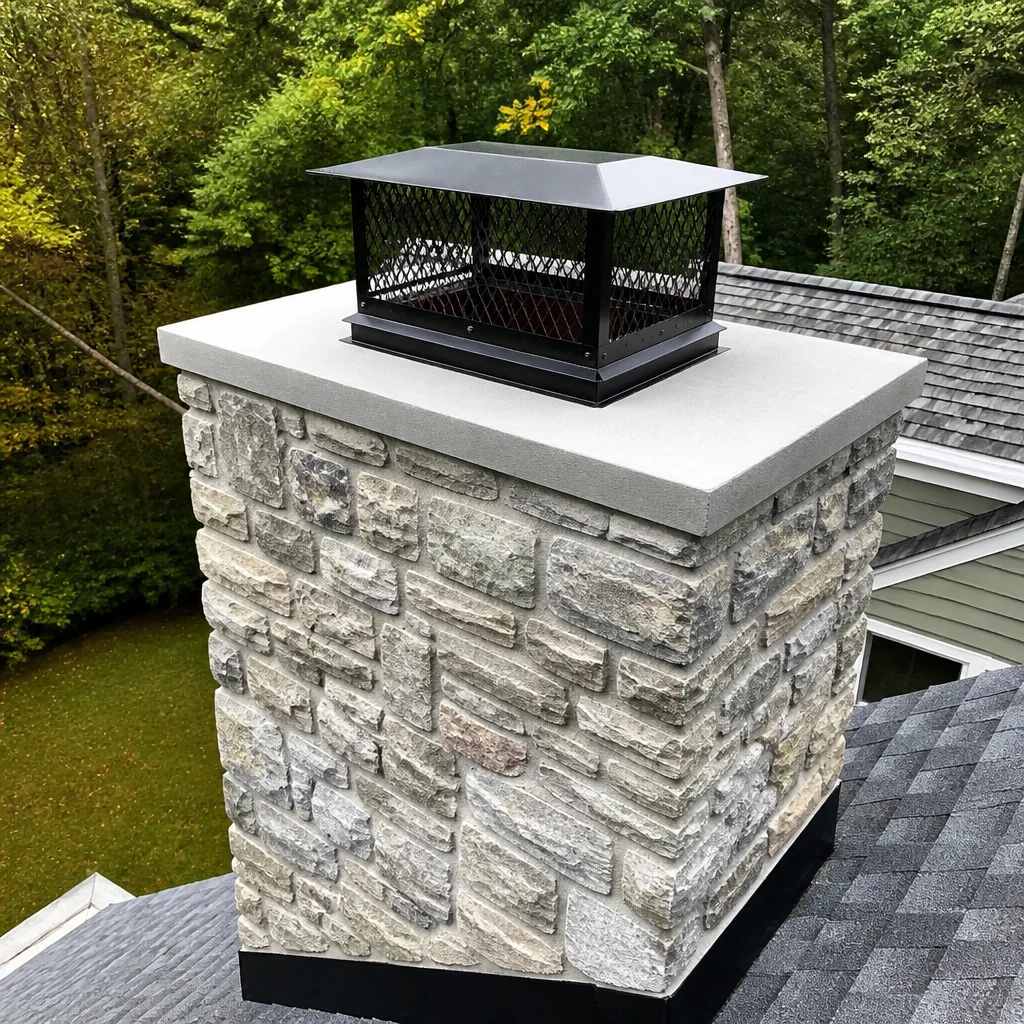 Caps & crowns
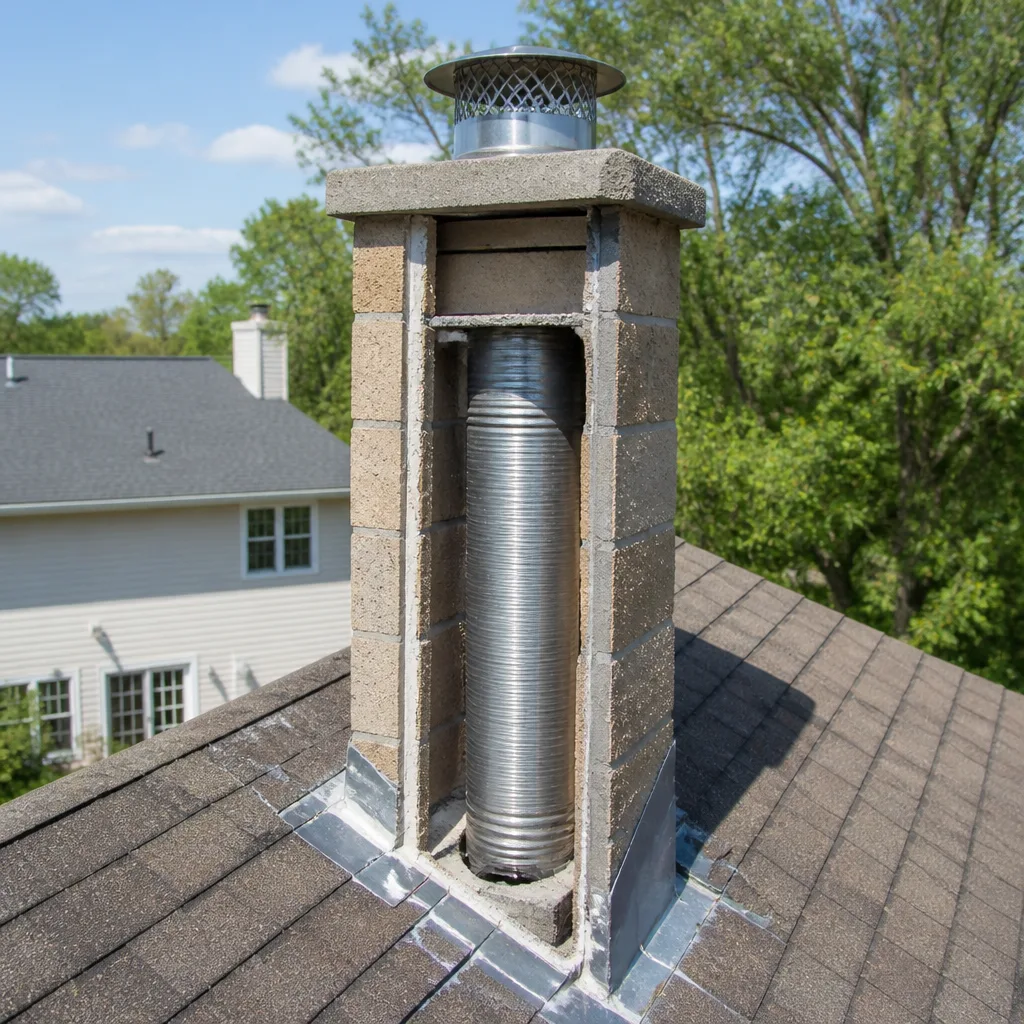 Flue relining
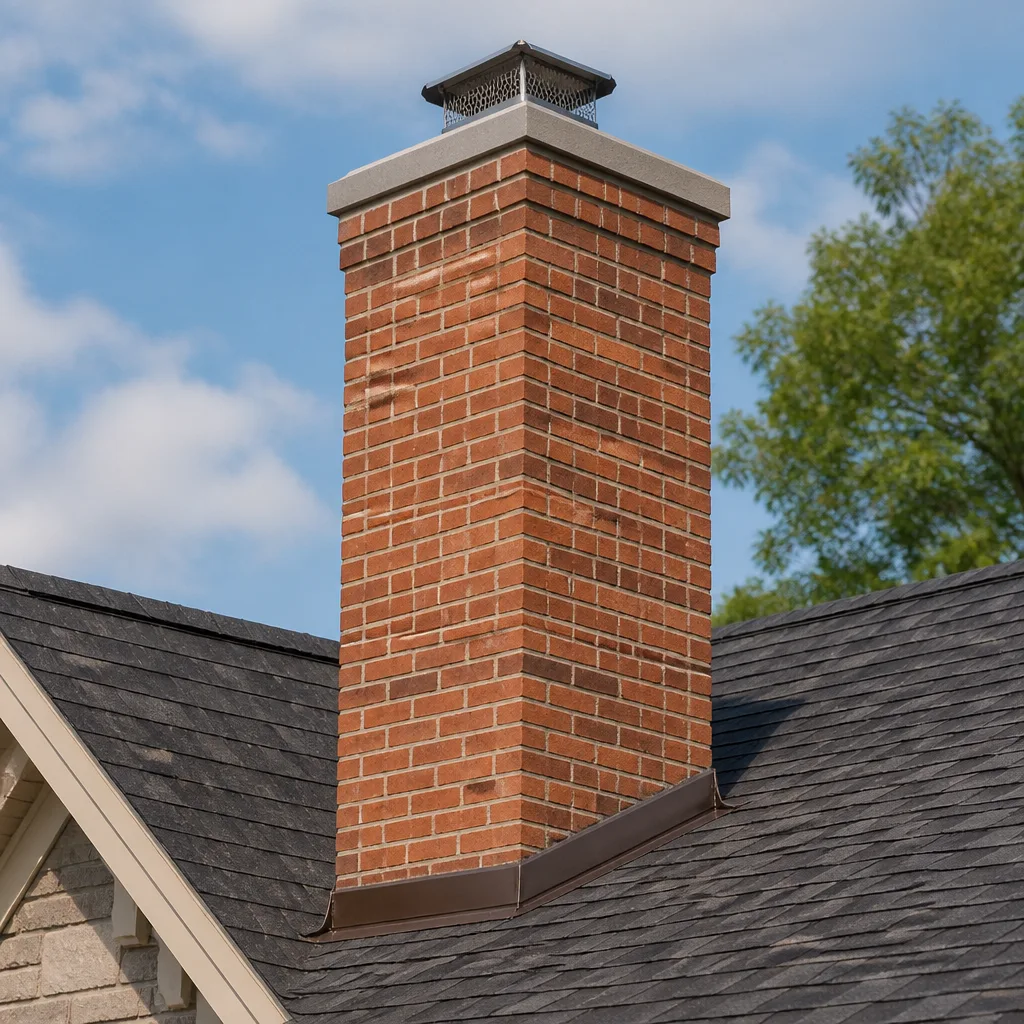 Masonry repair
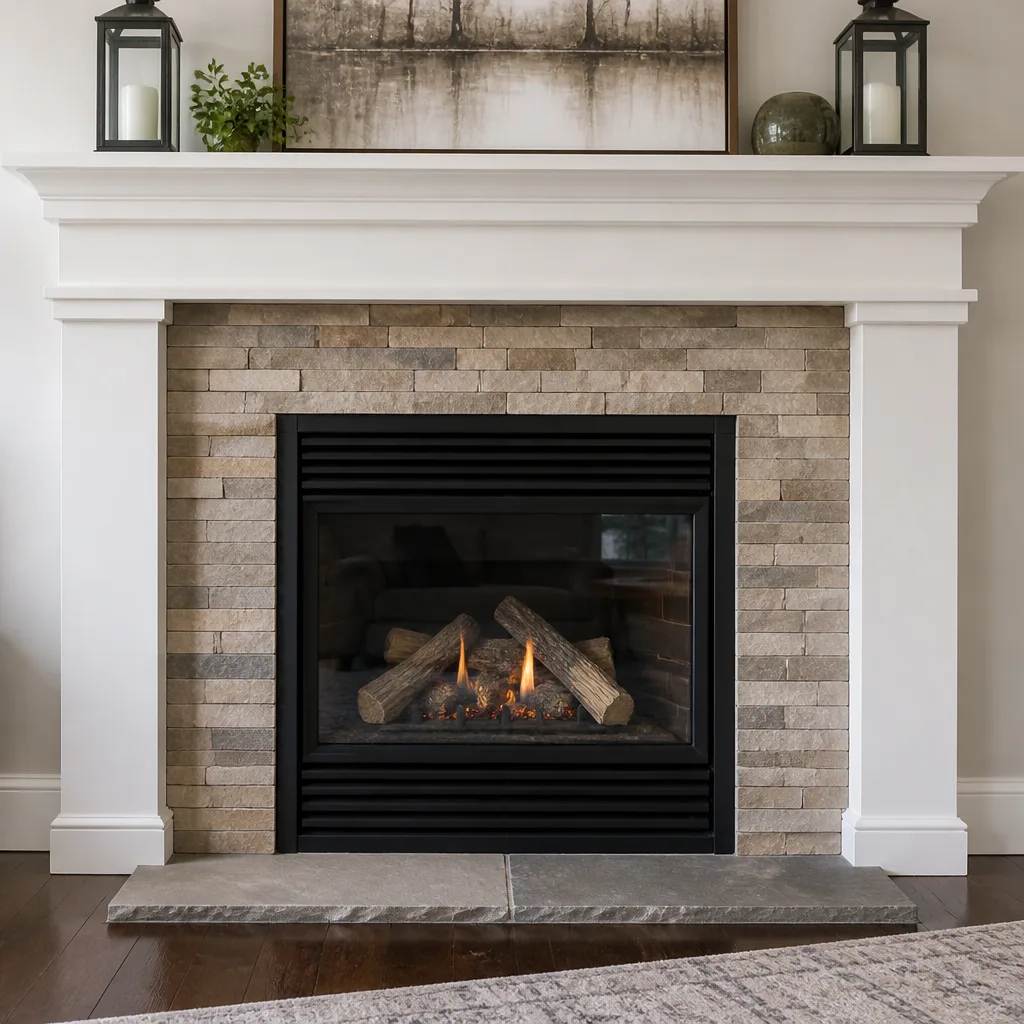 Gas fireplace service
Level 1 sweep and inspection to the NFPA 211 annual standard - flue, crown, cap, and flashing checked and photographed
Chimney sweep logs do not sweep chimneys. They loosen some creosote - which then falls where a brush and vacuum still have to collect it.
Chimney Sweep Troubleshooting in Richmond: Common Problems and How to Fix Them
If your fireplace smokes into the room, your first instinct is probably to open a window. That temporary fix is also the diagnosis: you’ve just confirmed a negative-pressure problem that no amount of cleaning will solve on its own. Most chimney trouble homeowners chalk up to “bad draft” or “an old fireplace” is actually a discrete, diagnosable condition, each one with a specific fix. Knowing which symptom points to which failure saves money and unnecessary panic. In this guide, we walk through the problems we see most often in Richmond, what each symptom means, what you can safely monitor yourself, and what needs a Level 2 inspection before you light another fire.
Quick Answer
Smoke rollout, slow draft, summer odor, and white streaks on the brick are four different problems with four different causes – they are not one vague “chimney issue.” A draft test, a camera inspection, and a look at the flue and cap will tell you which one you have. Once you know that, the fix is usually targeted and modest. The mistake is treating every symptom as a cleaning problem, or assuming a chimney that worked last winter will work this winter.
Styles & brands we work with
- Sweep & inspection
- Caps & crowns
- Flue relining
- Masonry repair
- Gas fireplace service
Table of Contents
- Map Your Symptom to the Right Repair
- Why Does Smoke Roll Into the Room?
- What Causes a Slow or Weak Draft?
- Why Does the Chimney Smell in Summer?
- What Do White Streaks on the Brick Mean?
- How Richmond’s Humidity Affects Your Chimney
- The Draft Test: What It Is and Why It Matters
- “It Worked Fine Last Year”: Why Chimneys Fail Non-Linearly
- What You Can Monitor vs. What Needs a Level 2 Inspection
Map Your Symptom to the Right Repair
Before anyone recommends work, the symptom should point clearly to a cause. Here’s how we approach diagnosis when we arrive at a home in Richmond, and how you can start sorting out your own situation before you call.
Chimney problems fall into a handful of recognizable patterns. The table below is the fastest way to narrow yours down. None of these are guesses – each symptom has a short list of likely causes, and a proper inspection eliminates them one by one.
- Smoke rolls into the room when you light a fire – likely negative pressure, an undersized flue, a blocked cap, or a competing exhaust fan pulling air the wrong way.
- Fire burns sluggish, smolders, or the room stays cold – likely a draft problem: an offset flue, a partially closed damper, cold-flue startup, or inadequate make-up air in a tight house.
- Musty, sooty smell in warm months – likely airflow reversal pushing creosote and soot odor back down the flue, cracked flue tile letting moisture and odor through, or a missing cap letting rain and animals in.
- White or gray streaks down the exterior brick – likely efflorescence, water moving through the masonry and pushing mineral salts to the surface. That points to a water-entry problem at the crown, cap, or flashing.
- Soot flakes on the hearth or firebox shelf – often a draft problem or a damaged flue tile shedding material, and worth an inspection before the next burn.
- Rust on the damper or firebox hardware – condensation inside the flue, which in Richmond’s climate is usually a water-entry or cold-metal issue rather than a defect in the fireplace itself.
Get the symptom right and you’ve already eliminated half the possible causes. Get it wrong – say, treating efflorescence as a soot problem – and you’ll spend money on cleaning that never addresses the leak driving the moisture in the first place.
Why Does Smoke Roll Into the Room?
Smoke rolling into the room means the chimney is not pulling harder than the room is pushing back. A fireplace works on pressure. Warm exhaust air rises up the flue because the air in the chimney is warmer and lighter than the air in the room. Anything that reduces the chimney’s ability to pull, or increases the house’s tendency to push air down that flue, causes smoke to spill at the firebox opening.
The most common causes we find:
- Negative pressure in the house. A tightly sealed home with a range hood, a bathroom fan, or a clothes dryer running can pull harder on the house than the chimney can pull on the firebox. The chimney is the easiest path for that air, so smoke comes down.
- A cold flue on startup. A cold chimney has no pressure difference yet. The fire has to heat the flue before it pulls reliably, and in the first minute or two smoke spills.
- A blocked or restricted cap. Bird nests, leaf debris, and screen clogging all narrow the opening. The flue is trying to breathe through a tightening straw.
- An undersized flue for the firebox opening. A large fireplace with a shallow or narrow flue simply cannot pull enough air. This shows up as smoke on every fire, not just some.
- Damper or flue geometry issues. A damper that does not open fully, an offset flue that bends sharply, or a lintel that interrupts flow can all stall the draft.
The window test you may already have done confirms negative pressure but doesn’t tell you how to fix it. For that, a draft test and a look at the flue’s actual geometry are the starting point. If your firebox is oversize for the flue, a properly sized chimney repair may involve relining to correct the ratio.
What Causes a Slow or Weak Draft?
A slow draft is a smoke rollout’s quieter cousin. The fire burns, but it’s sluggish. It smolders. The glass doors fog over, and you stand in front of a fire that should feel warmer than it does. Weak draft is almost always a function of flue temperature, flue geometry, and air supply.
Here is the sequence we work through on a weak-draft call:
- Check the air supply. A modern, tightly built home may simply not have enough make-up air for the fireplace to draw from. Cracking a window near the fireplace is the test, not the fix.
- Confirm the damper opens fully. A partially stuck damper is common in older fireplaces and is easy to miss.
- Look at flue sizing and shape. A rectangular flue that’s been changed, or a flue with a significant offset, will stall flow. So will an oversized flue for a small fire – the flue never gets warm enough to pull.
- Check flue temperature on startup. If the chimney is cold, a small practice fire first (a few sheets of newspaper, some kindling) warms the flue before you build the real fire.
- Inspect for restriction. A partial blockage – a dislodged tile, a collapsed liner section, a nest – is a real and sometimes invisible cause of weak draft.
Draft geometry problems need real correction, not a cleaning. We work with DuraFlex flexible liner systems specifically because they can restore smooth flow in complex, offset, or aged flues where a rigid liner would be a poor fit. If the draft problem is a liner condition, the liner is the fix.
Why Does the Chimney Smell in Summer?
That sooty, musty smell in warm weather isn’t your imagination, and it isn’t a cleaning problem in most cases. It’s airflow reversal. In summer, the air outside is often warmer than the air in your chimney. The chimney loses its upward pull, and the air in the house pushes down through the flue. Everything that’s stuck to the flue walls – creosote residue, soot, moisture – off-gasses back into the room.
The reasons a chimney reverses in warm months:
- Temperature inversion. Hot air outside, cooler air inside. The column that normally rises now sinks.
- Damp, humid air. Richmond’s coastal-influenced humidity loads the air with moisture, and moisture carries odor. A damp flue is an odor generator.
- Cracked or unlined flue tile. A cracked flue lets soot and moisture seep into the surrounding masonry, and odor travels through masonry more readily than through an intact clay flue.
- Missing or damaged cap. Rain down the flue raises the moisture level and worsens the smell. A cap also blocks the downdraft channel that reverses airflow.
- Ash left in the firebox. Old ash holds moisture and odor. Empty the firebox and clean the firebox floor at the end of the season.
The inexpensive habit that helps most: keep the damper closed when the fireplace isn’t in use. That’s a monitor-and-maintain fix you can handle. But if the odor is strong or persistent and the cap is intact or the flue tile is cracked, that’s an inspection call, not an air freshener call. A chimney sweep with a camera will tell you whether the flue is dirty, damp, or damaged before you decide anything.
What Do White Streaks on the Brick Mean?
White or gray streaks down the exterior brick are called efflorescence, and they’re a mineral salt deposit. Water moves through the masonry, dissolves salts out of the brick and mortar, and carries them to the surface, where the water evaporates and leaves the salt behind. Efflorescence is not cosmetic. It’s the visible signature of a water problem inside the chimney structure.
The water is getting in from somewhere, and here’s where a proper inspection earns its keep:
- The crown. A cracked or sloping-back crown lets rain run into the masonry top instead of off it. This is the most common entry point and one of the least noticed.
- The cap. A missing or loose cap lets rain straight down the flue, and splash reaches the top of the masonry.
- Flashing at the roofline. Failed flashing at the point where the chimney meets the roof lets water run behind the brick.
- Spalling brick or failing mortar joints. Once mortar softens and brick faces begin to spall, water gets in faster.
The catch: efflorescence alone doesn’t tell you which of these it is. That’s a job for someone with a camera and the experience to look at the crown, cap, and flashing together. Here’s what we want you to hear clearly – the amount of water moving through a chimney’s masonry does not have to be large to cause real damage over many seasons. Catching a cracked crown early is a much smaller job than replacing spalled brick courses later. If the streaks are new or getting darker, that’s your signal to get an inspection this season rather than next.
How Richmond’s Humidity Affects Your Chimney
Richmond sits on the eastern shore of San Francisco Bay, and the weather has a specific character: mild winters, cool summers with fog, and year-round humidity that rarely gets a long dry stretch. That matters for chimneys in a way it doesn’t in inland climates, and it changes what we look for on an inspection.
In our experience working in Richmond, two things stand out:
- Moisture stays in the masonry longer. Inland climates dry out fast between wet periods. Here, the humidity lingers. Mortar that stays damp stays soft, and soft mortar spalls more readily. That’s why efflorescence and mortar deterioration show up in Richmond on a faster timeline than the same age of chimney inland.
- Cold-metal condensation is a year-round concern. In a mild climate, the flue doesn’t always get hot enough to fully dry itself after a fire. Damp flue walls plus soot residue equals creosote that’s stickier and odor that’s more persistent. Creosote needs heat to dry out, and mild summers don’t always deliver that.
This isn’t a reason for alarm, and it isn’t unique to Richmond. It does mean the “wait and see” approach many homeowners take is a worse bet here than it might be inland. Damp masonry that gets caught in the first or second season is a small repair. Damp masonry that’s been softening mortar for years is a much larger one, potentially involving a rebuild rather than a spot fix. We also note that many Richmond houses are older, which is not a chimney defect in itself – but it does mean efflorescence and mortar condition deserve a close look you might not bother with on a newer home.
The Draft Test: What It Is and Why It Matters
Before we recommend a repair, we run a draft test. A draft test uses a smoke pencil – a small handheld device that releases a thin, harmless trail of smoke – held at the firebox opening, the damper, or the flue opening. The behavior of the smoke tells us everything about how the chimney is breathing.
Here’s what the smoke pencil shows:
- Where the smoke goes. If the smoke trail draws quickly up into the damper, the draft is healthy. If it hovers, curls back, or drifts into the room, the draft is weak or reversed at that point.
- Where the failure is. A smoke pencil at the firebox tells you what the room experiences. A smoke pencil at the damper tells you what the flue is doing at the top of the firebox. The difference usually pinpoints whether the problem is make-up air, flue geometry, or a cold flue.
- Whether a repair changed anything. After we clear a blocked cap or adjust a damper, a quick re-test confirms the chimney is pulling the way it should before we leave.
The smoke pencil is a low-tech tool and that’s exactly why it’s useful. It’s direct evidence, not a guess. If you’ve ever been told your draft problem is “just how the fireplace is,” a draft test is how you find out whether that’s true or whether something correctable is going on. We test before we recommend, because a repair on a chimney that’s pulling correctly is wasted money and a chimney that’s not pulling correctly doesn’t get fixed by hoping.
“It Worked Fine Last Year”: Why Chimneys Fail Non-Linearly
One of the most common things we hear in Richmond is some version of: “It worked fine last winter, so why is it a problem now?” The honest answer is that chimney deterioration is not linear. A chimney can pass one season and fail the next, and that’s not a sign the first inspection missed something – it’s how masonry and metal liners actually age.
Here’s why:
- Damage accumulates in steps, not slopes. A mortar joint doesn’t weaken gradually and evenly. It holds, then it crumbles. A flue tile holds, then it cracks. The failure happens on the day the joint fails, not on a neat schedule.
- Weather events tip the balance. A dry winter followed by one heavy wet season can accelerate spalling significantly. Humidity is the multiplier, and Richmond has plenty of it.
- Creosote builds up in layers. A lightly used fireplace can go two seasons on one cleaning, and then a heavier season of use pushes the flue past the point where it needs one. Use pattern matters as much as the calendar.
- Small cracks become big ones. A hairline crack in a flue tile lets in a little moisture, which expands the crack when it dries, which lets in more moisture. The chimney looks fine long after the process has started.
The practical takeaway is simple: a chimney doesn’t get a pass for last year. If you’re going into a burning season in Richmond and you can’t remember the last time the flue was looked at, that’s the sign to look now, not next year.
What You Can Monitor vs. What Needs a Level 2 Inspection
Not every problem needs a camera and a full inspection. Some things you can safely keep an eye on. Here’s the distinction we draw, and it’s a useful line for you to hold too.
Safe for you to monitor:
- Ash accumulation in the firebox – empty it when it gets more than an inch or two deep.
- Damper operation – open and close it once a season; if it moves freely, it’s likely fine.
- Visible soot build-up on the firebox walls – a sign a sweep is due, not a repair.
- Exterior efflorescence that isn’t spreading – still a sign to get an inspection at your next regular service, but not an emergency.
Needs a Level 2 inspection before the fireplace is used again:
- Any crack, gap, or debris visible inside the firebox or up the flue with a flashlight.
- Efflorescence that’s spreading, or new streaks appearing on brick that was previously clean.
- Smoke rollout that wasn’t happening before.
- Odor that’s worse after a fire or in summer than it used to be.
- A flue that’s never been inspected, or hasn’t been in several seasons.
- Any change to what you see on the hearth – soot flakes, tile pieces, rust on hardware.
A Level 2 inspection uses a camera to look at the flue from top to bottom, and that’s the point. It’s how you find damage you can’t see from the firebox. We do the sweep, the inspection, and the repair under one company for a reason: the person who inspects is the person who can do something about what the camera shows. There’s no hand-off to a second contractor and no gap where a recommendation goes unanswered.
For more on the full range of work we handle, see our Juniper Chimney Sweep services. For location-specific help, Richmond is where we do most of our work, and our technicians have up to 13 years of experience diagnosing exactly these problems.
Common Mistakes to Avoid
- Treating every symptom as a cleaning problem. A smoky fire, a summer odor, and white streaks are three different issues. Cleaning one of them doesn’t fix the other two, and it doesn’t make the underlying cause go away.
- Opening a window to “fix” smoke rollout. The window confirms negative pressure, and closing it later without addressing the cause brings the smoke back. Diagnosis has to happen before the fix.
- Storing firewood against the chimney. It keeps moisture on the brick and draws pests. Keep a gap between wood and chimney in Richmond’s humidity.
- Skipping the cap because the chimney “looks fine.” A missing or loose cap lets water in and reverses summer airflow. A cap is one of the cheaper fixes in the trade and one of the more impactful.
- Burning wet or green wood. Modern fireplaces and wood stoves are sensitive to moisture in the fuel. Seasoned wood burns hotter and deposits less creosote.
- Assuming a chimney that worked last year is fine this year. Deterioration steps up between seasons. The “it worked fine last time” reasoning is the one we hear most often, and it’s the one that leads to the bigger repair.
- Letting a company inspect but not repair. If the inspector can’t fix what they find, you end up managing two contractors and two sets of recommendations. One company owning both halves of the job closes that gap.
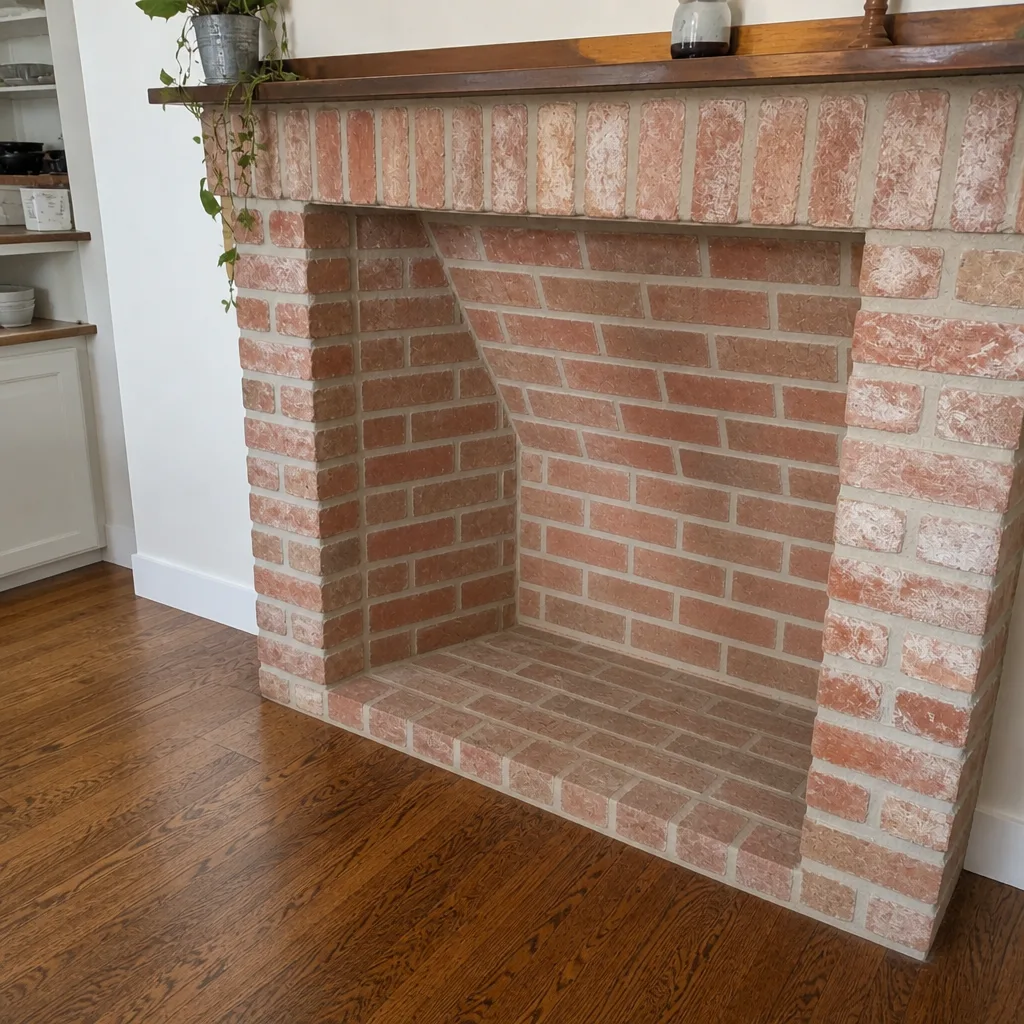
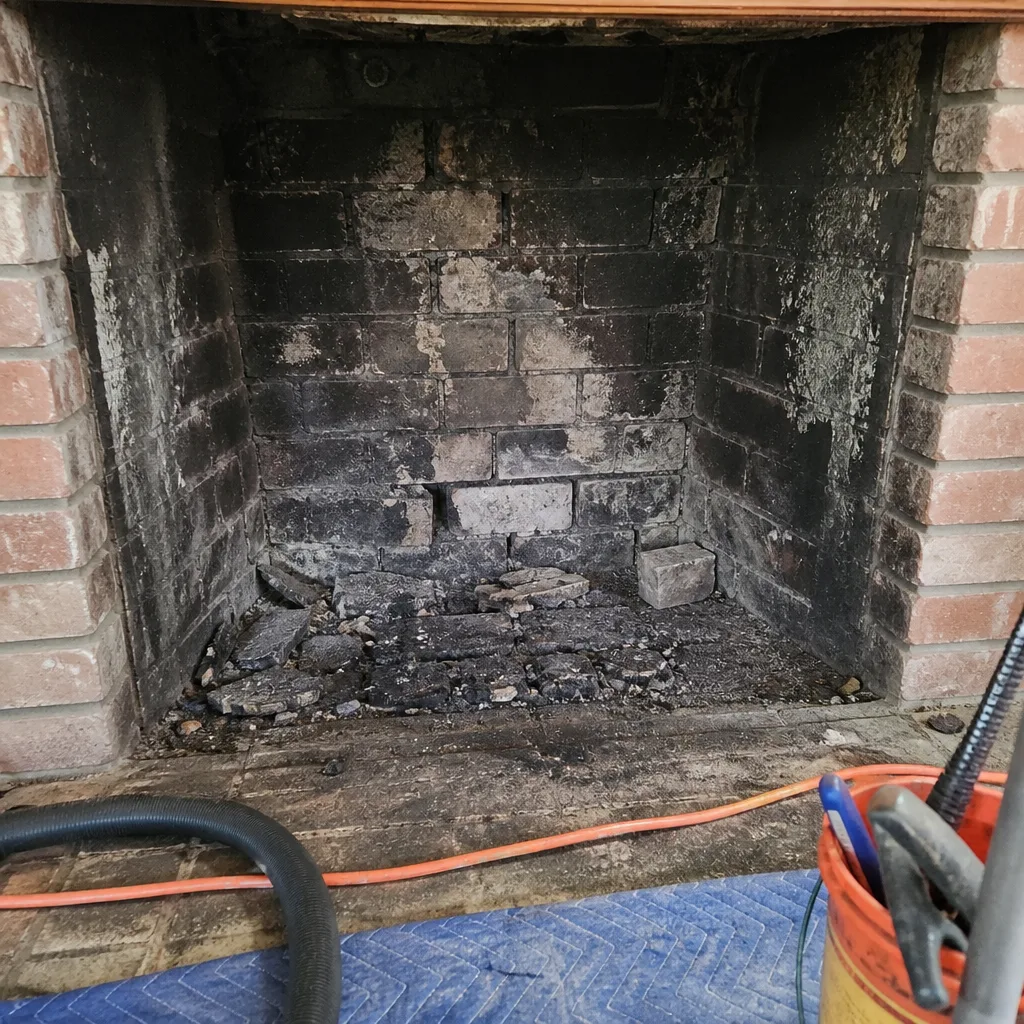
See the difference
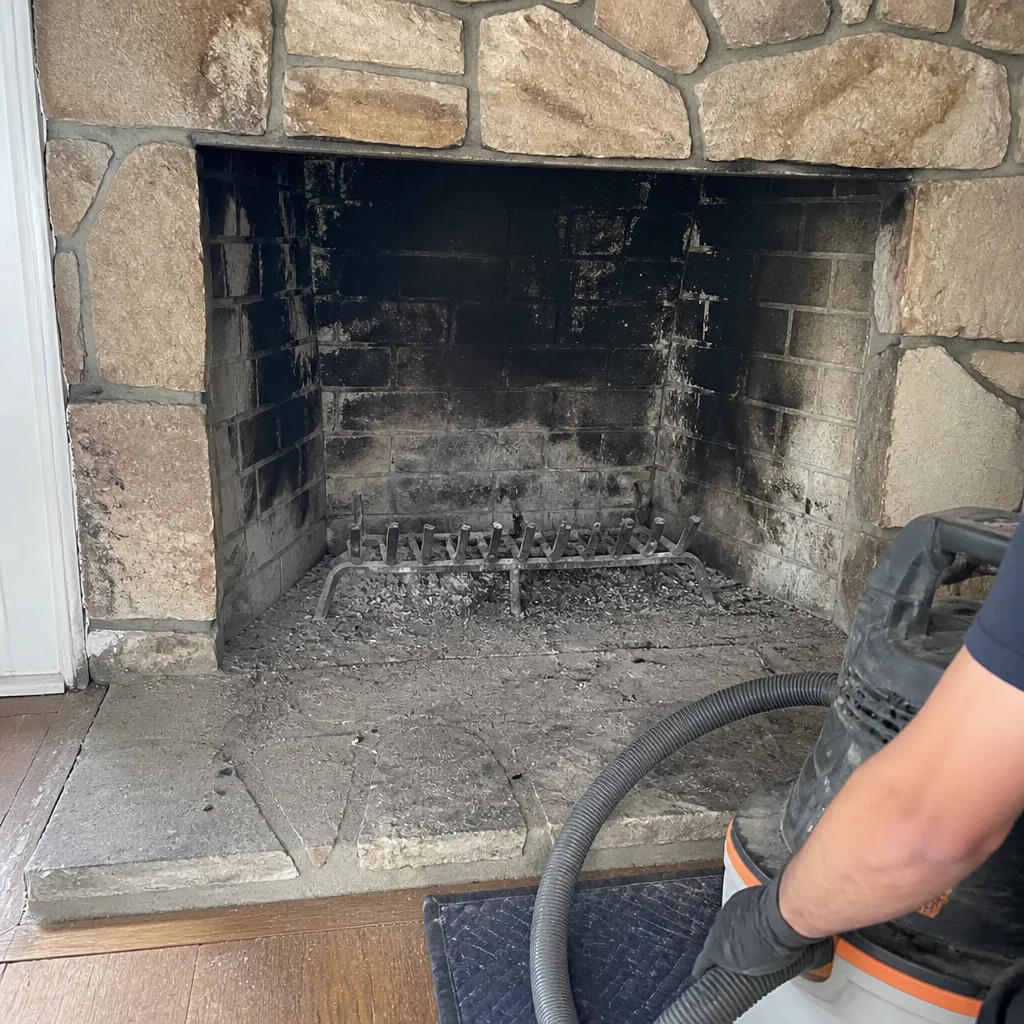 Before
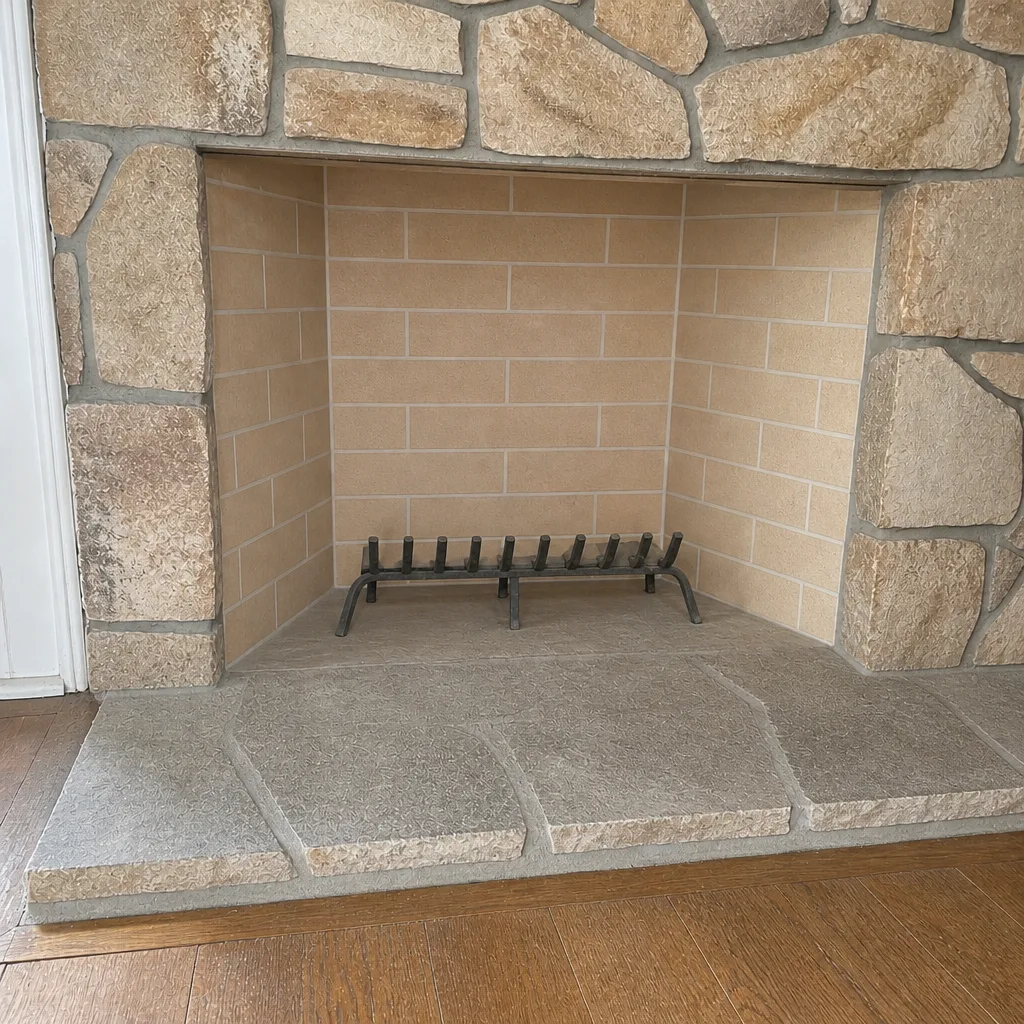 After
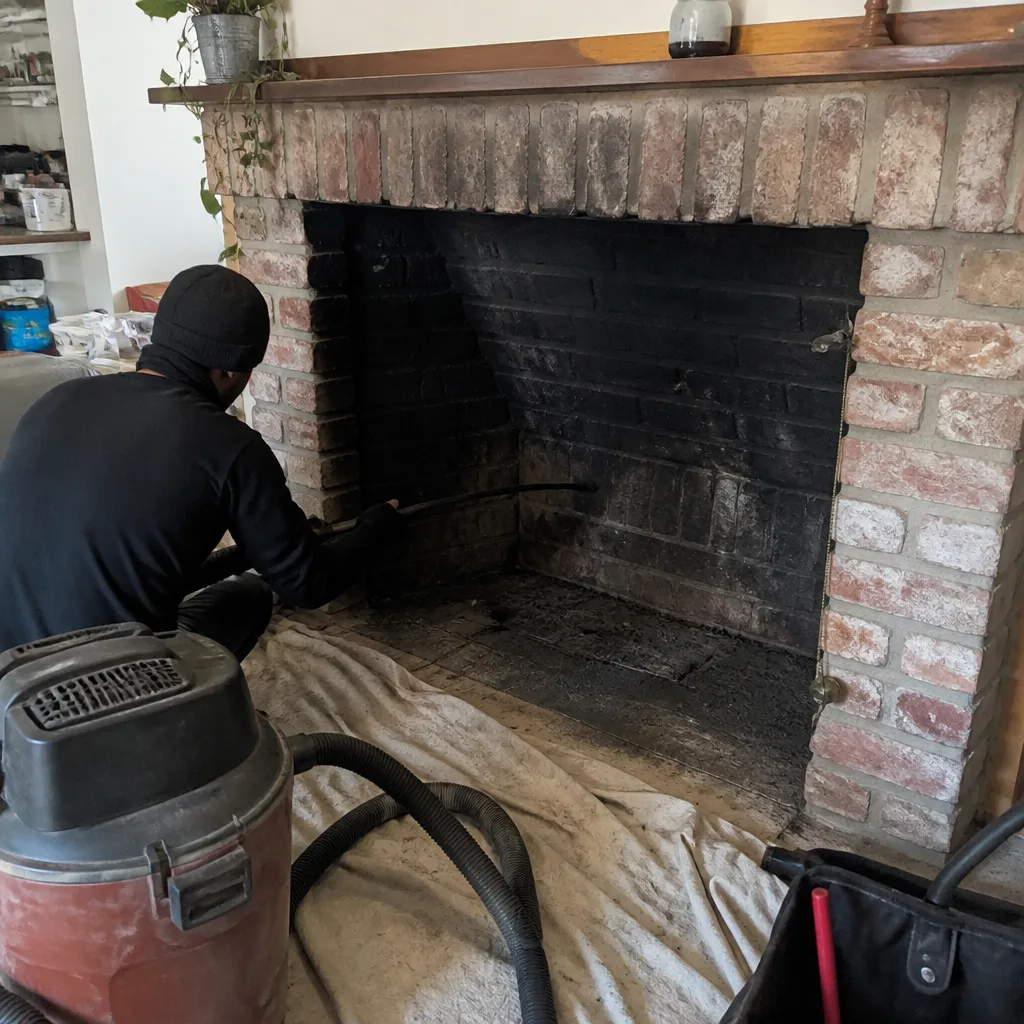 Before
 After
 Before
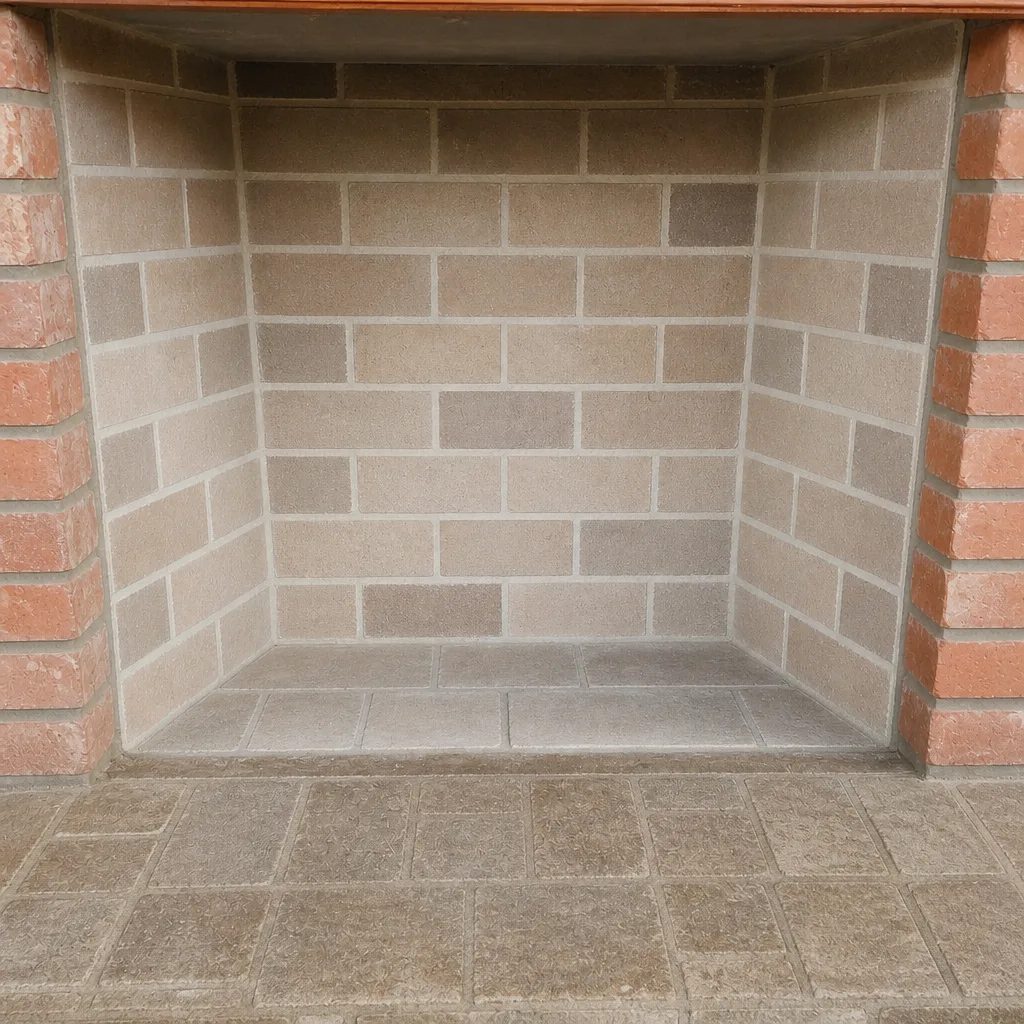 After
When to Call a Professional
Call us when you see something on the “needs a Level 2 inspection” list above, or when you’re not sure if what you’re seeing is normal. Call before burning season if the flue hasn’t been looked at in a season or two. Call if the problem is a change – a fire that smoked fine last year and rolls smoke this year, streaks that are spreading, or a smell that’s new. Call if you’ve had a quote from another company and you can’t verify what they found; a camera inspection shows you what’s there and what it means.
There’s one piece of DIY safety we want to name clearly: don’t try to inspect, clean, or repair the inside of a flue yourself. The components are metal and clay, the space is confined, and the risks – cuts, falls, carbon monoxide in an enclosed space – are real. This is work for a trained technician with the right tools.
Juniper Chimney Sweep offers free estimates in Richmond – call (866) 361-9755. We answer 24/7. Fast dispatch from 7am to 7pm, Sunday through Friday.
Frequently Asked Questions
White streaks – efflorescence – are a sign that water is moving through the masonry. They aren’t a fire hazard by themselves, but they point to a water-entry problem at the crown, cap, or flashing. The important thing is that efflorescence alone doesn’t tell you which of these is the cause. That’s a job for an inspection, and it’s worth getting checked before the water causes spalling or mortar failure. Call (866) 361-9755 for a free estimate – we’ll show you what we find before we recommend anything.
Usually not, and this is the tricky part. A summer smell is often airflow reversal, not a dirty flue, so a sweep doesn’t always fix it. Check the cap first – a missing or loose cap is a frequent cause. Keeping the damper closed when the fireplace is off helps. If the cap is intact, the smell is strong, or the flue tile is cracked, that’s the point to call – we’ll inspect and tell you which of these you actually have. Call (866) 361-9755 for a free estimate.
A draft test uses a smoke pencil to see how air moves through the chimney – up through the firebox and damper, or back into the room. It matters because it’s direct evidence, not a guess. A draft test shows where a problem is happening, and it lets us confirm a repair actually worked before we finish the job. If you’ve been told your draft problem is unfixable, a draft test is the answer to that.
The general rule is an annual inspection, and the mild but humid climate here makes that a reasonable floor rather than an over-cautious one. The humidity in Richmond means masonry stays damp longer and deteriorates a bit faster than in inland climates, so an annual look is money well spent. If it’s been more than a season or two since the last inspection, it’s time. Call (866) 361-9755 for a free estimate.
Yes, if it’s been more than a season or two since the last look. Chimney damage isn’t linear – masonry joints and flue tiles hold, then fail, and a chimney can pass one season and fail the next. The white streaks, cracks, and buildup that cause trouble accumulate between seasons, not on a neat schedule. Call (866) 361-9755 for a free estimate and we’ll tell you what’s actually there.
Often, yes, within the scope of the three services we offer – sweep, inspection, and repair – under one company. No hand-off to a second contractor, no second set of recommendations. We supply and install professional-grade components, including HeatShield liner restoration and DuraFlex flexible liners where the flue calls for them. Call (866) 361-9755 for a free estimate and we’ll lay out what’s possible in one visit.
The Bottom Line
The problems that look like one big vague “chimney issue” are usually specific, and specific problems have specific fixes. Smoke rollout, weak draft, summer odor, and efflorescence each point to their own causes, and the draft test plus a camera inspection is how you tell them apart. Richmond’s humidity makes moisture-related damage – spalling, condensation, efflorescence – a bigger concern here than inland, and that’s a reason to look now rather than next season. The “it worked fine last year” reasoning is the most common mistake we see, and it’s the one that turns a small repair into a big one. Call when something is new or changing, and don’t try to look inside the flue yourself. The chimney is a system, and every part of it – cap, damper, liner, crown – deserves a proper look now and then.
If you’re ready to know what’s going on with your chimney, call (866) 361-9755. We answer 24/7. Fast dispatch from 7am to 7pm, Sunday through Friday. Free estimates, and a proper look at what’s actually there.
Written by the team at Juniper Chimney Sweep.